Uganda’s industrial and oil and gas sectors are opening up real opportunities for local companies but as you step up to research and land those contracts, it is important to note that serious projects do not only look at who is available but who is ready.
Being ready means having the right people, the right skills, the right safety culture, and proof that your team can deliver work to the required standard.
Big projects need more than manpower
In the past, some companies could get work mainly because they had people on the ground. If you had welders, electricians, technicians, supervisors, or casual workers, that was sometimes enough to compete but that is no longer the case.
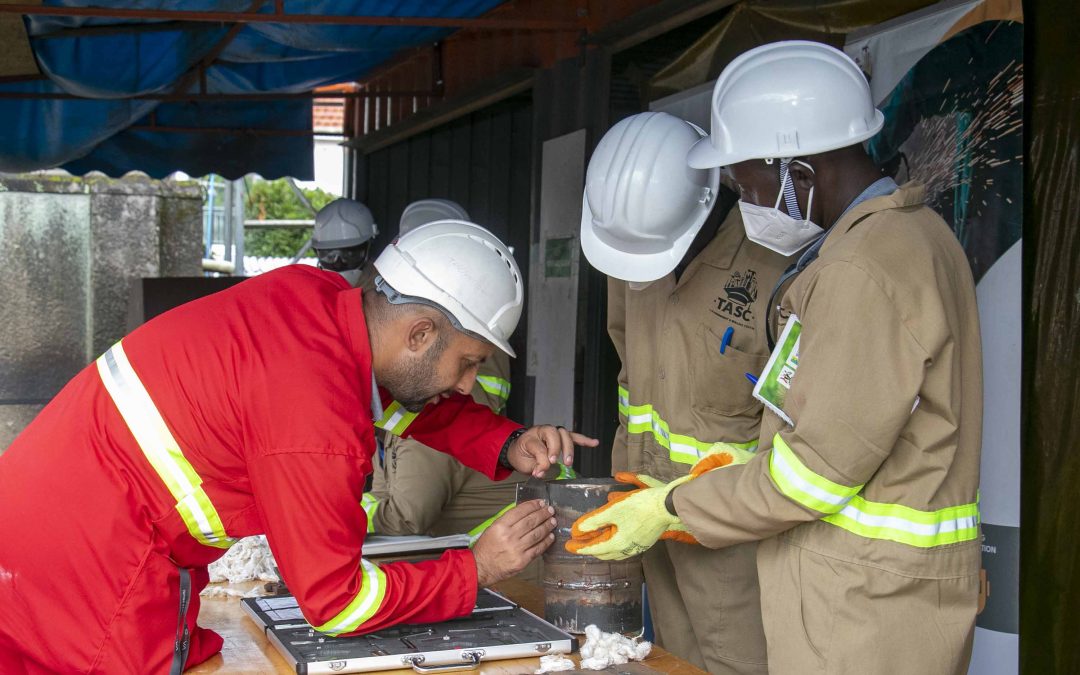
Industrial projects, construction projects, and oil and gas projects now need workers who understand quality, safety, procedures, documentation, and standards. For example, in oil and gas, skills like welding, Quality Control, and Non-Destructive Testing are not just “nice to have.” They are critical skills. This means a local company may have workers, but if those workers are not trained, tested, and certified, the company can still lose out.
Certification gives clients more confidence
The hiring organisation will want to know, for sure, if your company can you deliver without causing problems. Problems can mean poor workmanship, delays, accidents, failed inspections, rework, or non-compliance and certification helps reduce that fear.
When your welders, technicians, safety officers, or supervisors have recognised training and certification, it gives the client more confidence that your team has been trained, assessed, and exposed to the standards required on serious projects.
Safety is now part of business survival
Some companies still treat safety as a formality. They only think about it when there is an inspection, an accident, or a client asks for documents.
That mindset can cost a company work.
On industrial and oil and gas projects, safety is part of how the job is done. Workers need to know how to identify hazards, follow site rules, use protective equipment properly, and avoid unnecessary risks. For local companies, this matters because a poor safety record can lock you out of good opportunities. A trained team gives you a better chance of being trusted.
Quality control reduces costly mistakes
Poor quality is expensive.
A bad weld can lead to rework. A poor installation can delay a project. A missed inspection point can create bigger technical problems later. And when mistakes happen often, clients lose trust. This is why companies need people who understand quality control, not just people who can “do the job.”
Quality control helps teams check work properly before it becomes a problem. It also helps companies meet the standards required by clients, especially in technical sectors like oil and gas, manufacturing, construction, and energy.
A company that invests in quality skills is not just training staff. It is protecting its reputation. Local companies must prepare before opportunities come
One common mistake is waiting until a tender comes out before preparing. By that time, it may already be too late. If a client asks for certified workers, safety records, proof of training, or evidence of technical capacity, you cannot build all that overnight.
The best time to prepare is before the opportunity arrives.
That means companies should begin asking hard questions now:
- Do we have certified technical workers?
- Can our team meet project quality standards?
- Do our supervisors understand safety and compliance?
- Can we prove our team has been trained?
- Are we building skills that match where the market is going?
These questions may feel uncomfortable, but they are necessary.
Skills can help local companies compete with bigger players
Bigger companies often have more experience, better systems, and stronger documentation but local companies can still compete if they become serious about skills. Training helps close the gap and Certification helps prove competence.
This is also why national content efforts matter. TASC’s work in training and certifying local professionals is positioned around helping Ugandans compete for opportunities in the oil and gas sector instead of relying heavily on imported skilled labour.
For companies, the message is clear: local participation will not happen by luck. It will happen through preparation.
Industrial and oil and gas opportunities will not automatically go to local companies simply because they are local. They will go to companies that can prove they are ready.
That means having trained workers. Certified technicians. Strong safety awareness. Good quality control. Reliable supervisors. And a team that understands the standards of serious project work.
For any local company hoping to grow in this space, skills are no longer optional. They are part of the business strategy.